
Scout, Guide and Youth Group Fundraising Ideas That Actually Work in the UK
Practical fundraising ideas for UK Scout, Guide and youth groups - from a monthly prize draw to local grants - plus the raffle and lottery rules in plain English.
Scout, Guide and Youth Group Fundraising Ideas That Actually Work in the UK
If your group needs money for camp, kit or hall hire, the fastest route to reliable income is a regular online prize draw that parents, leaders and local supporters can join in seconds — something you can set up with nothing up front on Play Fund Win in about ten minutes and run every month without another car boot sale. Bag packs, coffee mornings and sponsored challenges still matter, but they are one-off efforts. The groups that stop worrying about money add a small, repeatable income stream alongside them.
Start with the number, not the idea
Before you pick a fundraiser, work out what you actually need and when. Most groups are funding a mix of: camp and activity costs, badges and equipment, hall or HQ hire, transport to events, leader training, and a hardship fund so no young person is left behind. Write the figure down, split it by term, and you will instantly see whether you need a one-off push or steady monthly income. Most groups need both — and it is the steady income that tends to get underestimated.
A monthly draw: the quiet workhorse
A monthly prize draw or 50/50 (where a share of the pot goes to one winner and the rest to your group) works well for youth groups because your supporter base is wider than you think. It is not just parents — it is grandparents, former members, leaders, local businesses and the people who remember being in the group themselves thirty years ago.
- Keep the ticket price low so it is an easy yes, and let people set it and forget it.
- Give it a job. "This month's draw pays for summer camp coaches" raises more than "help our funds".
- Share the winner every month. A named winner (with permission) is your best advert for next month.
- Let it run in the background rather than relaunching it each term.
Because sales happen online, there is no cash tin, no stub book, and no leader chasing money at drop-off.
The classics — done properly
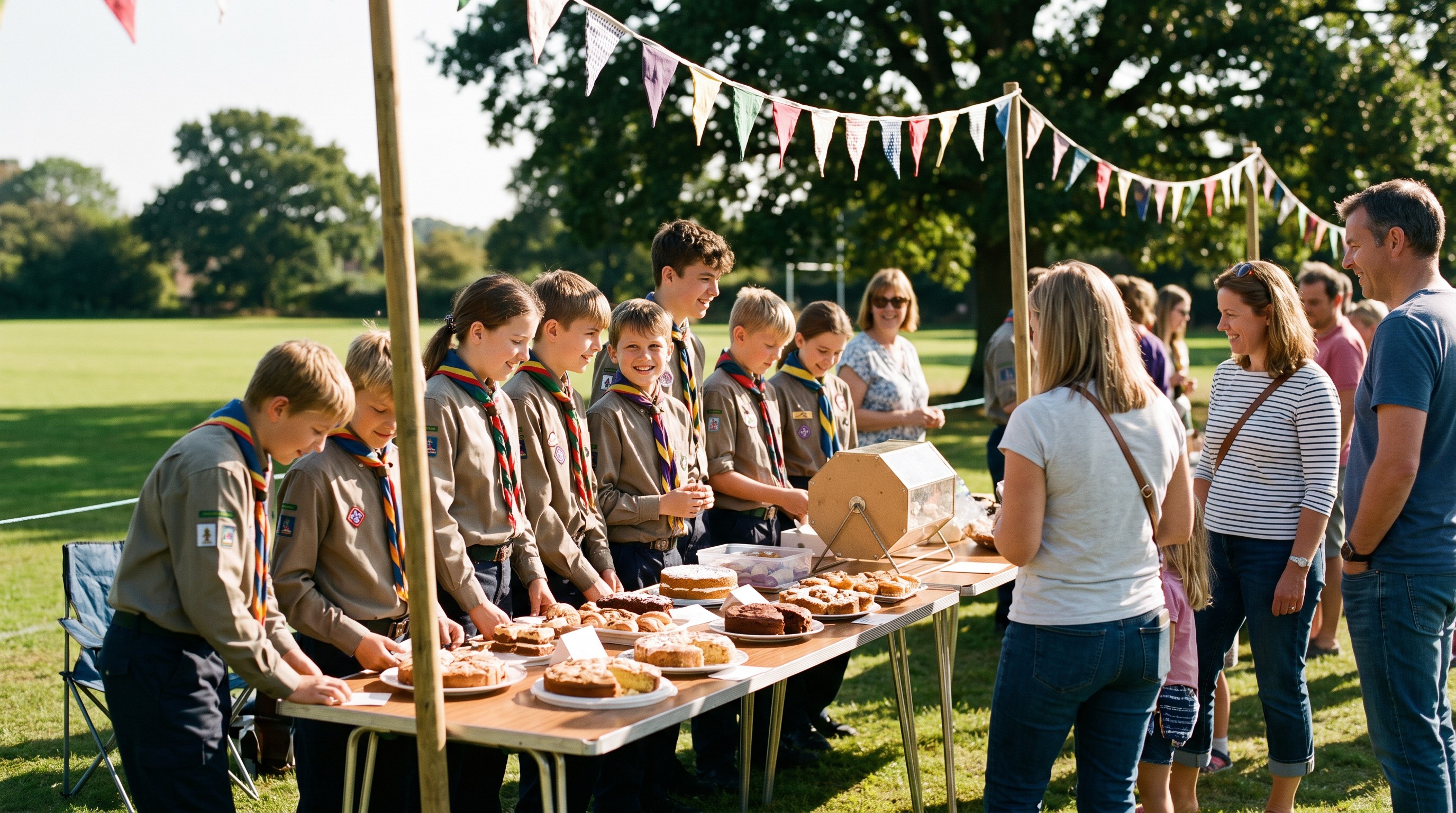
Traditional group fundraisers still work, especially when they are social: bag packing at a supermarket, a Christmas post or wrapping service, a car boot stall, a quiz night for the parents, a spring plant sale, or a sponsored hike that ties into badge work. The difference between a good one and a forgettable one is preparation — book early, give every volunteer one clear job, and always offer card or online payment alongside cash. A surprising share of income disappears simply because someone had nothing in their pocket.
If you run a sponsored challenge, put the sponsorship online too. A shared link that young people can send to relatives travels much further than a paper form that stays in a rucksack.
Ask locally — properly, not vaguely
Local businesses often say yes to youth groups because the goodwill is genuinely local. Approach them with something specific: sponsoring a piece of equipment, covering a minibus hire, funding activity kit, or donating a raffle prize. Small grant pots are worth your time too — parish and town councils, community foundations, supermarket community funds, and schemes run by your own national organisation or county. Grants reward clear costings and a short, honest explanation of who benefits, so reuse the numbers you worked out at the start.
The rules, in plain English
Raffles and lotteries in Great Britain are regulated under the Gambling Act 2005, overseen by the Gambling Commission. In short:
- Raffles held entirely at a single event (tickets sold and drawn there and then, no rollover, proceeds not for private gain) can usually run as an incidental lottery without registration.
- Anything sold in advance or beyond your own members — including online — normally needs to be a registered small society lottery or run under a licensed operator. Small society lotteries are registered with your local council, and there are limits on ticket sales per draw and per year, plus a minimum share of proceeds that must go to your purposes. Check the current thresholds with the Gambling Commission or your council before you start.
- Northern Ireland has its own separate rules, so don't assume guidance written for England, Scotland or Wales applies.
- Age matters. Draws are age-restricted, so use a platform that verifies age at checkout, and never have young people selling lottery tickets themselves.
- Gift Aid applies to donations, not tickets. If your group is a charity, you can claim Gift Aid on eligible donations from UK taxpayers, but not on raffle or lottery ticket sales. Many Scout and Guide groups are charities in their own right — some excepted from registering with the Charity Commission — so check your group's status before claiming.
This is a summary, not legal advice. The simplest way to stay on the right side of it is to run draws through a licensed platform that handles the compliance for you.
Make it repeatable
The single biggest change most groups can make is to stop starting from scratch. Keep one supporter list. Run the same draw every month. Put the link in your newsletter, your parents' chat and your social posts. Hand it over cleanly when leaders change, so next year's team inherits something that already works rather than a blank page and a deadline.
Ready to give your group a steady income stream? Play Fund Win helps UK youth groups, clubs and charities run compliant online prize draws, raffles and lotteries. There is nothing to pay up front, you keep your share of every ticket sold, and you can be live in about ten minutes at playfundwin.com.
Tagged in:
On This Page
One fundraising tip a week.
From the team behind £1M+ raised. Unsubscribe any time.
Related Articles
Explore more insights from our blog that you might find valuable


